Paste a video URL in the inspector
If you're a doctor, a lawyer, or a senior software engineer, your LinkedIn feed has been trying to tell you something. Tucked between the thought leadership and the humble-brags are job ads that read like riddles: Physicians wanted. Remote, flexible, $150 an hour. Help train AI. Most people scroll past but a surprising number don't.
The ads are everywhere once you look. In a sample of three and a half thousand senior listings pulled this summer, nearly a thousand turned out not to be jobs at all. The titles are impeccable - Senior Investment Lead, Remote Quantitative Analyst, Remote Physics Researcher (PhD) - but open the listing and there's no employer named, no team described, and where the salary should be, a different word: payout. One title in twenty-four says it outright: Equity Research Expert (Train AI Models Part Time!).
Follow the ads and you fall into an industry that barely existed three years ago and that most people still don't know exists at all. It has no shopfront and no product you can buy. Its factories are spare bedrooms and kitchen tables. Its raw material is professional judgment, sold by the hour. Its customers are roughly a dozen frontier AI labs.
Consider Surge AI. Founded in 2020, it has never taken a dollar of venture capital, and by 2024 it was booking well over a billion dollars a year in revenue with roughly 120 employees - about ten million dollars per head, five times Apple's ratio - coordinating a network of around a million contractors. Its first outside raise is being discussed at valuations around $25 billion, for a business that marks homework.
Or Mercor, founded in 2023 by three college dropouts, all still under twenty-five. It raised money at a $10 billion valuation in October 2025 and was in talks at $20 billion nine months later, with annualised revenue past $2 billion. Mercor doesn't ask applicants to click on traffic lights. It puts them through a twenty-minute job interview conducted by an AI, to determine whether they're qualified to teach an AI. By early 2025 it had interviewed 468,000 people this way. The machine screens the humans who train the machine.
The machine isn't learning from the internet anymore - it's learning from you.
The story we were told about AI was a story about scale. Scrape the internet, pour it through the GPUs, and intelligence condenses out the other end. For a while that was even roughly true. But the public internet is finite, and the labs have - roughly speaking - read it. All of it. The scaling story ran out of story.
And reading the internet only gets a model halfway. What emerges from that first stage is a machine that has absorbed the statistical shape of everything humans have written, and will continue any text plausibly. Plausible is not the same as useful. It doesn't decline requests, structure an answer for a reader, or distinguish confident from correct - it predicts the next word, indifferently, forever. Everything that turns that engine into something resembling a colleague - the manners, the judgment, the refusals, the reasoning - is added afterwards, in a second stage of schooling the industry calls post-training.
And this schooling doesn't run on web scrapes, it runs on people.
The recipes have forbidding names - supervised fine-tuning, reinforcement learning from human feedback, process supervision - but the ingredients are human. Experts write out perfect answers by hand, thousands of them, for the model to imitate. Experts rank the model's attempts against each other, teaching it taste. A single expert comparison on a difficult task costs around a hundred dollars, and the budgets run to millions. And experts grade the model's reasoning, line by line. When OpenAI wanted its models to work through mathematics properly, it paid mathematicians to review 800,000 individual reasoning steps - marking each one correct, neutral or incorrect, stopping at the first mistake, explaining why. Eight hundred thousand times.
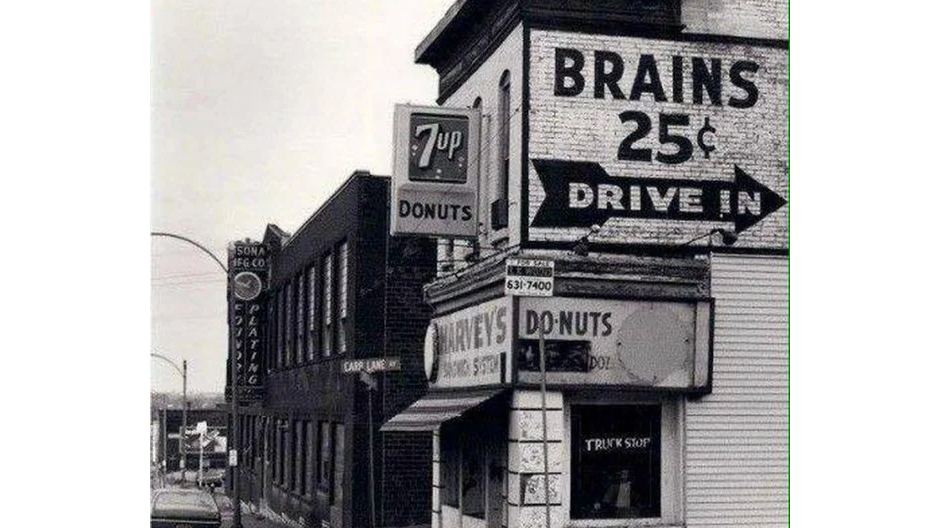
Strip away the mystique and a frontier model is trained on the internet and finished on the graded homework of physicians, barristers, and PhD mathematicians, billing by the hour through platforms with names like Outlier and Alignerr. Brains sucked out through a straw, at market rates.
For most of recorded history, expert knowledge was deliberately unwritten.
The medieval guilds called their craft knowledge 'mysteries', and the word appears in legal documents for centuries. An apprentice was indentured to learn the 'art and mystery' of his master's trade. This trade sense of 'mystery' is not the ordinary one. It descends from ministerium, Latin for an occupation, which medieval usage tangled with misterium, a secret. The occupation was the secret. England's Statute of Artificers made the seven-year apprenticeship national law in 1563, and seven years of watching a master's hands was the only interface the knowledge had. The guilds wrote almost nothing down - which is why historians still struggle to reconstruct how a period craftsman actually sharpened a saw or mixed a glaze. So the secrecy worked.
Then, 1751, Paris. Denis Diderot - son of a master cutler - began publishing the Encyclopédie, and put the trades in its title: a reasoned dictionary of the sciences, the arts, and the métiers. His declared ambition was a man who would descend into the workshops and pour everything the craftsmen knew into a book. His writers did exactly that. They went into the shops, questioned the artisans, sketched the machines, and traced each trade from raw material to finished article across eleven volumes of engraved plates - thousands of them, glassmaking to fan-making, published so that any literate stranger could read what had taken a lifetime at the bench to learn.
The artisans did not cooperate gladly. Diderot complained that anyone asking questions in a workshop was suspected of being a tax collector, or a rival planning to open a competing shop. His suggested workaround was blunt: apprentice yourself, or send a man in under cover.
The guilds, as guilds, never surrendered a single mystery. Individual masters did - one workshop, one interview, one engraving at a time, for money, for flattery, or just for the pleasure of being taken seriously by a philosopher from Paris. The corporate body protested; its members cooperated.
The professions of 2026 have their own mysteries: the clinical hunch, the deal instinct, the sense that a legal argument is compelling but will lose. None of it written down, and this time secrecy has nothing to do with it - judgment never had a notation. Post-training is the notation. The prompt-response pair is the engraved plate.
There is a name for systematically extracting knowledge from the people who hold it and fixing it in a process that no longer needs them. It was coined on a factory floor.
Frederick Winslow Taylor's Principles of Scientific Management (1911) opens with a programme: management should gather up the traditional knowledge held in the heads and hands of the workmen and reduce it to rules, laws, and formulae. Time the motions with a stopwatch, extract the method, and the method - not the man - becomes the asset. The world came to call it Taylorism. Harry Braverman, writing in 1974, named the mechanism at its core: the separation of conception from execution. The workers keep the doing and management takes the deciding.
Taylorism conquered motion. It never reached judgment. You can time a shovel stroke, but timing a differential diagnosis tells you nothing. For a century, the conception half of work - the part that weighs, decides, and recognises - stayed where the guild mysteries had always lived - in people, transmitted by apprenticeship, priced by scarcity.
The platforms are not buying answers - the answer to any single medical question is worth nothing. They are buying graded judgment: which of these two responses is better, where exactly this chain of reasoning went wrong, what a good output looks like in this domain and why. Preference rankings, step-level labels, rubrics. The stopwatch has been replaced by the grading interface, and the target is precisely the layer Taylor could never touch - conception itself.
Three things distinguish this round from the last one. It is voluntary. It is selective - aimed at the credentialed, not the crowd. And it pays: $200 an hour and up for senior specialists, the equivalent of a $400,000 salary.
Who profits from a transformation is one of the most stable patterns in economic history. I wrote more about this in a previous article - Johann Fust financed Gutenberg, sued him in 1455, took the presses and the best employee, and founded the world's first publishing house. Within five years Fust was rich and Gutenberg was not. J.P. Morgan forced Edison out of his own electrical company and turned it into General Electric. Samuel Insull built the utility model and captured what the inventors of electricity never did. The value goes to whoever organises the market between the capability and its buyers.
The brain market has three main organisers. All three sit in the same place - between the experts and the labs - and each works it differently.
Scale AI runs volume: a task queue open to hundreds of thousands of contributors, gated by automated tests, absorbing enormous throughput when a lab enters a training cycle. Surge AI runs curation: a vetted network with a religious focus on data quality, which reportedly won a contract worth over $100 million a year from Google after the search giant struggled with other vendors' data. Mercor runs placement: consultant-style ongoing contracts between individual specialists and the labs, brokered by its AI interviewer and the proprietary dataset it has built from half a million of them.
How much the position is worth was demonstrated in June 2025, when Meta paid $14.3 billion for 49 per cent of Scale AI - and proved the point twice over. First by the price and second by the aftermath. Rival labs pulled their business rather than route their training data through a company half-owned by a competitor, and a Mercor co-founder cheerfully described the deal as having torpedoed a rival overnight. The labs know precisely where the choke point in their own supply chain sits. They are trying to buy it.
Below the platforms, secondary infrastructure is forming. One listings aggregator describes itself as drawing on more than five hundred sources - every significant annotation platform among them - and refreshing every sixty seconds. On it sits piece-work priced up to $230 an hour, no client named, responsibilities generic enough to fit any senior role. The brain market has a ticker.
It is Tuesday evening and the queue has tasks in it, which is not guaranteed. The screen shows a patient case and two answers to it, side by side, both fluent, both plausible, one of them wrong in a way that took you eleven years to learn to see. Below them, the marking scheme: accuracy, completeness, clarity, helpfulness, safety, each a box checked on its own. Below that, the justification field - vague justifications get flagged in quality review, so you explain the error the way you would to a registrar. Then the last field - the golden answer, the response the machine should have written. You write it and submit. The dashboard adds the task, the minutes, the rate, and the next pair loads.
Somewhere around the fourteenth pair the queue goes empty. No message, no explanation. The project hit its data target, or the budget ran out - you will not be told which. You refresh. You refresh again.
On paper this is the best-paid casual work ever offered at scale. Foundational tasks - classifying text, evaluating everyday prompts - pay $12 to $25 an hour. Work requiring real judgment runs $25 to $50. Domain experts - practising attorneys reviewing legal reasoning, physicians grading diagnostic chains, senior engineers auditing code - command $60 to $150 and up. Mercor advertises an average rate of $95 an hour, with senior specialists above $200. All of it remote, all of it asynchronous, none of it requiring anyone to leave the profession they trained for.
Off paper, it looks different.
Demand tracks the labs' training cycles, so it arrives and vanishes without warning. A flood of tasks appears when a model enters training and stops overnight when the data target is hit - a state workers call the empty queue - EQ, in the forums - and describe as unannounced rolling layoffs: dashboards refreshed hourly, nothing behind them. Onboarding is elaborate and unpaid - hours of assessments and training modules that can lead directly to an empty queue. Quality control is algorithmic and largely unappealable. Workers report demotions, pay cuts and outright bans triggered by shifting rubrics or false-positive security flags - a municipal internet provider mistaken for a VPN - with support loops that never reach a human.
The legal system has noticed. Class actions filed across 2024 and 2025 against Scale, Surge and Mercor allege misclassification and wage theft. The unit economics of the entire industry rest on all million brains being independent contractors. The lawsuits were still pending when the security gave way. In March 2026 Mercor was breached through a compromised open-source component, four terabytes exfiltrated - applicants' interview videos, background checks, Social Security numbers. Meta paused its contracts while investigators checked whether training methodologies had leaked. The class actions over the breach joined the class actions over employment status.
Employers have spent two years pulling professionals back into offices - two-thirds of ordinary job ads now demand presence. The piece-work listings run the other way, loudly. They put 'Remote' in the job title itself at four times the rate of everything else. The platforms cannot compete on prestige or security, and don't try. They compete on the single term their target market most wants and their competitors have spent two years withdrawing.
The opaque metrics, the sudden deactivations, the unpaid qualifying rounds - this is the standard machinery of the gig economy, applied without modification to board-certified physicians and doctoral chemists. The gig economy did not move up-market. The up-market moved to the gig economy.
'A company is its people'. Every annual report says it but almost none of them says what it means. What it means is tacit knowledge - the philosopher Michael Polanyi's observation that we know more than we can tell. The analyst who senses a model is wrong before she can say why. The engineer who reads a codebase's history in its shape. The partner who knows which clause the other side will actually fight over. Firms are warehouses of exactly this, and it has always been their least protected asset, because it was never protectable: patents cover inventions, non-competes cover clients, NDAs cover documents. Nothing covers judgment. It walked out of the building every evening and walked back in every morning, and the arrangement held for the entire history of the firm because there was nowhere else for it to go overnight.
Now there is. A liquid, hourly, global market in professional judgment - transacted by the person rather than the firm, reached through the same job boards the firm recruits on, paid into a personal account. The analyst sells the shape of her judgment on Tuesday evenings, and her employer has no record it happened. Nothing is stolen and no document leaves. The judgment that wrote them does.
And the firms are subsidising the buyer without noticing. The office mandate that reads as a return to normal is, from the other side of the market, a blunder: it makes the platforms the only ones offering the terms - remote, asynchronous, no meetings - that part of the expert market wants more than a raise. The competition for expert judgment is no longer only between employers. It now includes a well-funded market that offers the terms employers withdrew, at rates most employers don't match, for an asset employers never learned to value because it never before had a price.
Ronald Coase asked in 1937 why firms exist at all, and answered: because using the market for everything is expensive. Hiring judgment for the long term beat renting it piecemeal, so the firm's boundary settled where it did. That boundary now has a hole in it, person-shaped, open evenings and weekends. What a firm is when its distinguishing asset trades by the hour on someone else's exchange is a question with no answer yet.
The industry that buys judgment describes its own future in a way no employer ever has - it expects to need less of it, from fewer people, doing ever more abstract work.
The work has already climbed several rungs. First, experts wrote the model's answers from scratch. Then models wrote and experts ranked. Then experts stopped grading answers and started grading reasoning, step by step. Now experts increasingly write the rubrics - and a judge model does the grading, with humans auditing the judge. The frontier is environments: simulated companies, mocked systems, artificial customers, inside which models train against programmatic success criteria with no grader present at all. Each rung requires fewer, better, more expensive people than the one below. Each rung exists because the one below was automated.
Where an output can be checked by a program - code that runs, a proof that verifies - the human graders are already being engineered out. What survives sits at the top - translating professional standards into rules a machine can apply.
So are the experts digging their own graves at $95 an hour?
Of course they are. But the graves get dug with or without their hands on the shovel. The commoditisation needs no particular expert's consent. Decline the task, and a stranger with the same credentials three time zones away accepts it before the queue refreshes. Short of a profession refusing collectively - the discipline the guilds existed to enforce, and the mechanism no modern profession has - the only open question is who gets paid for the digging.
And the shovels cross borders. The platforms recruit wherever the credentials are, so a radiologist trained at German public expense sells her judgment, evenings, to a San Francisco platform, which sells it to an American lab, which compounds it into an American model. The expertise emigrates by the hour. The training bill was paid by the German taxpayer; if the models trained on her judgment eventually undercut her profession, the unemployment bill lands on the same desk.
The Mainz Psalter of 1457 carries the first printed colophon: Johann Fust and Peter Schöffer's names and the date, set at the back of the book. Gutenberg - whose invention printed it, on presses Fust had taken from him in court two years earlier - appears nowhere.
The models carry names the same way. The labs sign them and the brands are the colophon. The physicians who graded the diagnoses, the mathematicians who marked the reasoning, the lawyers who ranked the arguments appear nowhere in the product. The projects carry codenames, the clients go unnamed, the work dissolves into the model. A million contributors, no credits.
But there is an interesting hard limit here - the brain market can only buy what generalises across an industry. Judgment stripped of its context is exactly what a general model can use, and exactly what a stranger's hourly grading can supply. What it cannot supply is the judgment that makes a particular firm that firm - because that can't be bought by the anonymous task. It lives in the record of situations and consequences that only the firm holds.
We ran the extraction on ourselves - it's now a product, distill.pm - twelve years of one consultancy's email, chat and documents - a million of them - distilled into fourteen hundred lessons ('never quote a fixed price from a brief alone; sell a short paid discovery first'), each traced to the situations that taught it. Measured against decisions from that history, a general AI model makes the firm's call about four times in ten. The other six live nowhere but the firm's own files.

© FLUXUS 2026
Fluxus Ltd · Registered in England and Wales · Company no. 08806522 · VAT no. GB 177 5370 79
Registered office: Wellesley House, Duke of Wellington Avenue, London, England, SE18 6SS.